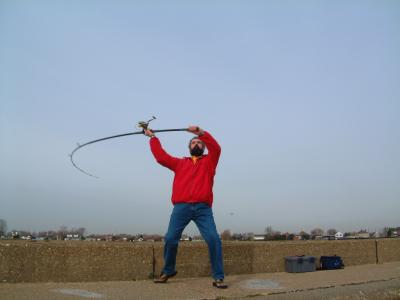
 Every veteran fisherman will have a tale or two about the beginner fisherman. Many live in fear of the beginner fisherman throwing his first cast and will avoid them as much as possible to prevent getting 'into the hook's way'. To make yourself popular at the fishing site, it's a wise move to do some casting practice on the yard or roof-top before you go.
When practising, you don't need to use lures or live bait but to keep the weight true to what you will be using by tying some small pieces of thin cord or shoelace. The main principle to remember is that the fly will follow the direction that the tip of your rod was going when it was suddenly snapped during a cast.
Good casting is like a good golf swing. You need to use your whole body. So if your cast goes awry, you may find you've inadvertently lowered your hand or your shoulders as you cast. It's important to keep in sync with your body's rotation so that you can lead with your elbow for the forward move.
Another reason a bad cast is that you could be holding the rod hand too low. Watch the position of your feet as well. If your back foot is too far out and back, it will prevent you from making that abrupt stop so necessary for a long back cast.
If you find during your practice that there isn’t enough power to maintain the correct trajectory, it could be that you've cast too hard on the forward movement. This will cause slack in the line due to the fly pulling it down too hard. To correct this, accelerate faster on the back cast.
If you are a complete novice, it could be a wise move to get some training from an expert. Or you could download a video on the matter from the Internet, where you'll find many examples of a good cast from many veteran fishermen. At the very least, you'll need to observed season fishermen on site before taking your first cast.
Many fishing guides and trips also include training in their package, so it might be worthwhile to go on one of these to get expert tuition right from the start. It will stand you in good stead for the rest of your life.
Pix credit: http://wayneandwax.com


